

Between clay courts and management
A joint interview with Groundsman Gijs Abelen and Park Manager Rolf Bredschneijder
At Park Startbaan, everything revolves around the visitor experience, quality and continuity. But who actually ensures this? And more importantly: how do you view the same park when you are responsible for the quality of the park and the courts, or for the day-to-day running of the park?
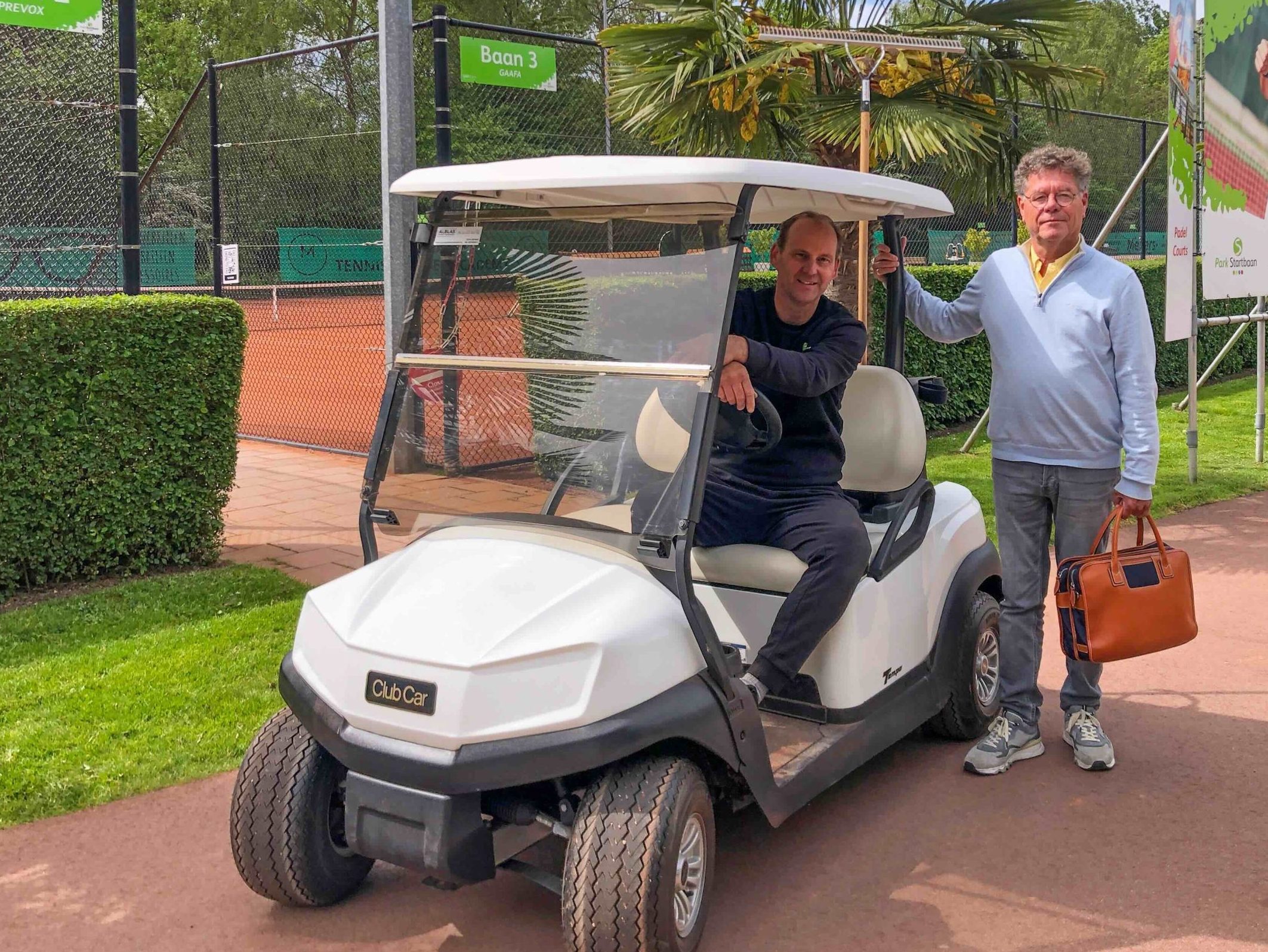
In this double interview, we speak to Gijs Abelen, groundsman at the park since 1 March 2026, and Rolf Bredschneijder, park manager. Two roles, two perspectives — united by a single goal: ensuring that Park Startbaan runs smoothly every day.
Whereas Gijs looks at the condition of the pitches and maintenance down to the last detail, Rolf looks at the bigger picture: occupancy, development and the future of the park as a sports community. Sometimes those worlds fit together seamlessly. Sometimes there’s friction. And that’s exactly where it gets interesting.
Introducing:
Gijs Abelen
Gijs Abelen has been working as groundsman at Park Startbaan since March 2026, succeeding the experienced Herman Mus. His role revolves entirely around the quality and playability of the courts. As groundsman, he is responsible for daily maintenance, assessing weather conditions and ensuring consistent quality under varying circumstances. Gijs has a strong practical profile: someone who works based on observation, experience and timing.
Most of this work goes unnoticed by the average player, but it has an immediate impact on the playing experience. The groundsman is therefore a crucial link in ensuring the quality of the grounds — without ever taking centre stage.
Gijs: “I make sure everything is just right. Day in, day out. The courts and the park must feel just right. If members don’t even think about it, I’ve done my job properly.”
Rolf Bredschneijder – Park Manager
Rolf Bredschneijder has been appointed as park manager of Park Startbaan since February 2025. He studied law in Leiden and has a background as a freelance professional in career coaching and in-company training, with a clear affinity for sport and tennis. He knows the tennis world like the back of his hand, partly through his two sons and as a tennis coach during his student days. As park manager, he focuses on the bigger picture: the organisation of the park, staffing, the development of facilities and the strategic direction for the future. His role is less visible on the courts themselves, but is decisive for how the park develops as a whole.
Rolf: “I look at the big picture. Not just how things are going today, but where we’re heading. The park must continue to develop.”
The first glance What is the first thing you look at when you walk onto the course?
Gijs: “The courses. Moisture, texture and evenness. You can tell straight away whether it’s going to be an easy or a difficult day. And sometimes you just know: this is going to be hard work.”
Rolf: “The occupancy. What’s happening today? How’s it going? But to be honest: if the pitches aren’t in good condition, I can see that straight away. Then I know Gijs is going to be busy… and I probably will be too, eventually.”
When is it right?
Gijs: “When the players don’t say a word. Silence is the greatest compliment.” Rolf: “When everything seems to run smoothly. That’s usually no coincidence, but the result of planning and consultation.”
Craftsmanship vs. decision-making, What is the biggest misconception about your work?
Gijs: “That maintenance is simple. Just a quick fix and you’re done. It doesn’t work like that. It’s all about timing, intuition and experience.”
Rolf: “That you can control everything. In reality, you’re constantly balancing interests, figures and people. And everyone is right — from their own perspective.”
When do you think: this was thought up from behind a desk?
Gijs: (laughs) “I do think that sometimes, yes. Especially when it sounds good in theory but works slightly differently in practice.”
Rolf: “And rightly so, sometimes. But conversely, I also sometimes think: this seems simple, but there’s more to it than just execution. That’s when it’s good that we keep each other on our toes.”
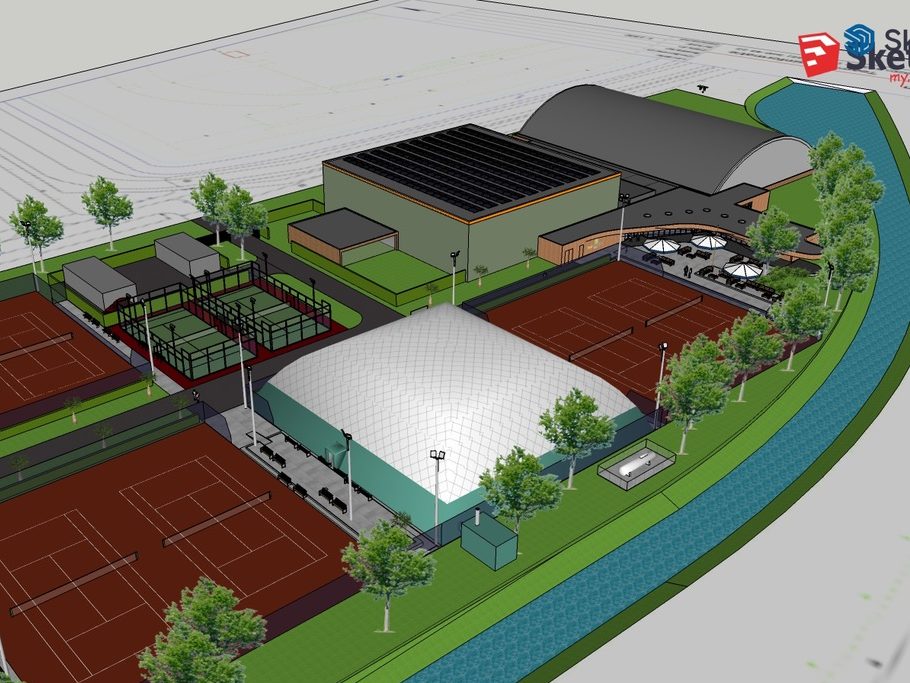
The Air Dome, a great new initiative
Gijs, what are your concerns? “Gravel under an air-supported hall behaves differently. Moisture, hardness, recovery in the spring. You have to take that seriously, otherwise you’ll pay for it later.
Rolf, why go ahead with it? “Because standing still isn’t an option. Indoor capacity in the region is declining, whilst demand is growing. So you have to take action, even if that brings new challenges.”
When will the air dome be a successful project?
Gijs: “When the courts are back in top condition by spring. That’s what it ultimately comes down to. That’s why we’ve opted for a new type of clay that requires less maintenance.”
Rolf: “If we can offer more on a long-term basis without compromising on quality. And if members see it as an improvement, not a compromise.”
The park as a whole. When is Park Startbaan more than just a sports park?
Rolf: “When people don’t just come here to play, but also stick around. When it becomes a place you enjoy being.”
Gijs: “You notice that straight away. More use, more life. But that also means: more maintenance. So the more successful the park, the more vigilant I have to be.”
The person behind the work. When do you have a good day?
Gijs: “When everything goes according to plan. And the weather cooperates a bit. Unfortunately, you can’t control the latter.”
Rolf: “When things come together. When you see: this is right. That’s often the result of choices you made weeks earlier.
Biggest pet peeve?
Gijs: “Players who leave the pitch as if someone else will sort it out. That’s true… but I’d rather they didn’t.”
Rolf: “Short-term thinking. It always ends up costing you more in the long run, you just don’t see it straight away.”
Collaboration. What do you need from the other person?
Gijs: “Clarity. What do we want, where are we heading? Then I can plan ahead.”
Rolf: “Practical insight. What works, what doesn’t. Decisions are better when they’re based on reality.”
Where do things go wrong?
Gijs: “When planning and reality clash. Nature doesn’t stick to a schedule.”
Rolf: “When choices have consequences that only become apparent later on. Then you have to make adjustments without it feeling like you’re going back on your decision.”
Quality vs. usage. When does it go wrong?
Gijs: “When a court has to endure too much and is poorly maintained. Then you gradually compromise without realising it straight away.”
Rolf: “When you only look at occupancy. Then you win today, but lose tomorrow.”
Conclusion?
Both: “Balance.”
Which of the two…? Answer without thinking.
Who’s played at the highest level?
Gijs: “Me. You can tell straight away from the way I move.”
Rolf: “That’s right. That’s particularly interesting from a historical perspective.”
Better at golf?
Rolf: “Me.”
Gijs: “Keep on dreaming, Rolf. You’re certainly better at fishing balls out of the water — but I don’t think that counts towards lowering your handicap.”
Who’s more critical?
Gijs: “Me, about everything you can see.”
Rolf: “Me, about everything you haven’t seen yet. That’s worse.”
Gijs: “And me, about the execution.”
Rolf: “Me, about the whole picture. So we don’t get in each other’s way.”
Who’s the biggest perfectionist?
Gijs: “Me.”
Rolf: “Agreed. Thank goodness. Saves me the hassle.”
Why do you make a good team together?
Gijs: “Because we complement each other. I’m on the ground and see straight away what’s needed; Rolf looks further ahead and sets the direction. Sometimes we see things differently, but that’s precisely why we keep each other on our toes. Ultimately, we both want the same thing: for everything to be right at the park.”
Rolf: “Because we work towards the same goal from different angles. Gijs ensures the basics are in order every day; I make sure those basics remain future-proof. We call each other to account where necessary and rely on each other’s expertise. That makes it strong — and, to be honest, just plain fun.”
Looking ahead What will the park look like in five years’ time?
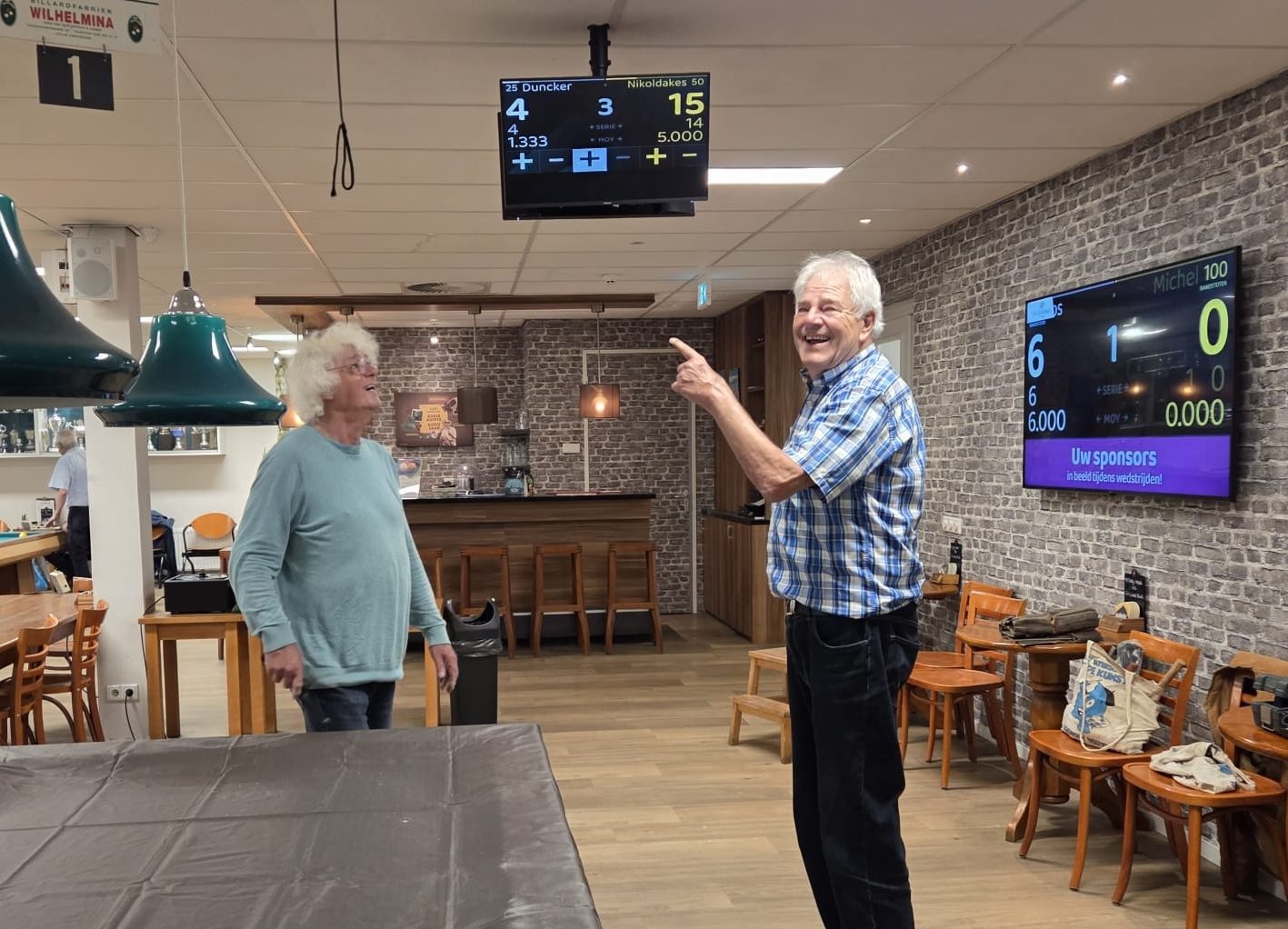
Rolf: “More than just tennis, padel and billiards. More dynamism, more activity. A place where sport and socialising come together.”
Gijs: “And hopefully still courts that people enjoy playing on. Because that’s where it all begins and ends, after all.”
In conclusion. Park Startbaan is, for me…
Gijs: “The freedom to organise my own work and to work at one of the most beautiful parks in the Netherlands.”
Rolf: “The best job ever! And a place that needs to keep developing.”
Two men. One park. Somewhere between clay courts and policy, quality is born.